Is your team firing on all cylinders?
Every CEO we meet wants a high performing workforce that is engaged, agile, developed and productive in order to help execute their strategy. But before they spend big money and time on employee satisfaction surveys and the actions they generate, smart leaders make sure that the changes will bring about the desired business results.
Consider this real world example.
- Employees at a recent client cited the lack of career development opportunities as key to their dissatisfaction.
- They, like many other employees across multiple industries, wanted visible options to learn, grow and advance.
- The company quickly assembled an internal team to address the problem and, as a result, created a state-of-the art career resource center.
- Great news except for the fact that most managers did not support their employees going to the center because "they needed to get their real work done at their desk."
Not surprisingly, the pressure of the urgent day-to-day business tasks often outweighs the longer-term importance of retaining top talent in the eyes of front-line managers. So, as one employee put it, "another great idea that did not deliver great results."
Why?
In addition to day-to-day pressures, many managers view engagement, development and retention as someone else's responsibility. They believe that the annual employee satisfaction survey and the resulting action plan belong on the sidelines of their day-to-day business. What these well-meaning managers failed to realize is that even the best plans can and will fall short if they aren't supported at multiple levels in the organization.
That's where performance coaching can create a sustained and measurable difference.
Coaching for engagement and development can reduce the risk of failure, empower leaders to tap into their employees' discretionary effort, and encourage employees to own their careers. When the coaching relationship is directed at these issues, it helps managers and employees find simple, yet meaningful, ways to engage and develop beyond the everyday distractions and for the long term. And, very appealing to leadership, coaching can also mean big improvements in the company's bottom-line.
Read About the 6 Tips to Get Engagement and Performance Started
About LSA Global
Founded in 1995, LSA Global is a leading performance consulting and training firm that helps high growth technology, services, and life-science companies create a competitive advantage by powerfully aligning their culture and talent with their strategy. Learn more about getting aligned

Most of us have had to deal with a horrible coach, teacher or boss at some point during our lives. And it is rarely easy.
My worst boss micromanaged everyone on our team, was more worried about who he sat next to than what he delivered, played favorites and did not help us grow in our careers. Fortunately his boss saw through his antics and replaced him with a more superior and motivating leader before we all quit.
An article in the Huffington Post by Dr. Tasha Eurich wonders why there are so many bad bosses. She claims "they're bad because everyone is afraid to tell them." As bosses rise up the corporate ladder, there are fewer and fewer employees willing to tell bosses the truth about their behavior and the negative effect they have on the motivation and engagement of their followers. I know that early in my career I was certainly timid about providing upward negative feedback.
According to a survey by Reputation Management Consultants, the top three CEOs with the worst reputations are Donald Trump, Jamie Diamond of JP Morgan Chase, and Martha Stewart. If your boss emulates one of these three, you have some options. New manager training programs advocate open lines of communication between team members and managers. If this recommendation were followed, there would certainly be better leaders. A difficult conversation about the truth of their management behavior may eventually be necessary but, meantime, there are other ways to deal with a bad boss.
Get 3 Immediate Tips for Dealing with a Bad Boss
About LSA Global
Founded in 1995, LSA Global is a leading performance consulting and training firm that helps high growth technology, services, and life-science companies create a competitive advantage by powerfully aligning their culture and talent with their strategy. Learn more about getting aligned
Good learning leaders start by creating a strategy that outlines clear and compelling choices about where to play and what actions to take that all key stakeholders agree upon.
Easier said than done.
Done right, a successful strategic plan sets a learning and development function up to perform beyond just the sum of its parts. Without a clear direction, your training function may tactically achieve some short-term wins, but it will fail to garner the ongoing trust, support and results required to make a meaningful impact on your career, your company or your employee base.
We have learned from experience that there are many different ways to "skin the cat" - some work and some don't.
- At one professional services client that grew from 50 to 2,500 employees in two years across 5 countries, the executive team identified talent development as a strategic imperative for growth. The company then went on to build a world-class training function, deliver industry leading engagement and retention rates and successfully go public. Their approach worked.
- Conversely, at a fast growing high tech client, the challenge was that even though 87% of employees listed professional development as their #1 priority on a recent employee engagement survey, only 20% of the executive team agreed upon the value and strategic direction of their L&D function. Because of this, their learning results are inconsistent, top talent is leaving and their varied approach is not working.
We have learned that there are many different paths to creating a successful training function. In our experience, however, there are 5 main strategic approaches that differentiate one training function from another. One direction is not necessarily better than another, but you do need agreement on the direction to be successful.
Read About the 5 Core Training Function Strategies and Key Mistakes to Avoid for Each
About LSA Global
Founded in 1995, LSA Global is a leading performance consulting and training firm that helps high growth technology, services, and life-science companies create a competitive advantage by powerfully aligning their culture and talent with their strategy. Learn more about getting aligned

Two recent high growth clients have made significant shifts in their learning and development functions.
The first, a 4,500 person networking firm appointed an internal candidate who was a successful systems engineer and sales leader to run the function. The second, a fast growing services firm of 350 employees that plans on doubling in size in 12 months, hired a high potential line manager from a competitor. While both are passionate about attracting, developing, engaging and retaining top talent, neither have any training, organizational development, instructional design or human capital experience or backgrounds.
And, they are both already making great moves and asking all the right questions. Why? Because they are both taking a no-nonsense business approach to learning...the same approach that everyone should take to treat talent differently and impact the business where and when it counts.
In addition to high executive-level expectations, their added challenge is to create (or re-create) the training department from scratch. The executive team wants a strategy and plan that makes sense and that will make a difference.
What are the big picture and essential ingredients of the ideal learning and development function?
Read about 4 Big Picture Ingredients When Designing an Effective Training Function from Scratch
About LSA Global
Founded in 1995, LSA Global is a leading performance consulting and training firm that helps high growth technology, services, and life-science companies create a competitive advantage by powerfully aligning their culture and talent with their strategy. Learn more about getting aligned

My other friend called the same person 15 minutes later. He explained our dilemma and asked what the possibilities were. He listened. He empathized with the difficulty of the request. He shared that we had stayed at the resort for 5 years in a row and really enjoyed it. He put himself in the customer service rep's shoes. He connected and made small talk. And guess what? We stored our bags at their offices and were all set for a great day of skiing.
It often seems as though the customer is at complete odds with the customer service rep. From a customer perspective, wouldn't it be great to better understand the world of the rep behind the scenes in order to know how to get more effective service?
Here are 7 tips from behind the barricades from our customer service experts that should help you as both a consumer and a service leader:
- Stay courteous. You may be legitimately angry but do not become abusive. The polite caller is more likely to get satisfaction with their complaint than the nasty, threatening caller. However, it is said that if you are "talking" to a computer, a raised voice might speed your call along to a real person and expedite a solution.
- Know that if you are a regular, long-term customer, you have an edge. Once your record is on view and the rep recognizes your valued customer status, you will be treated with more respect and are more likely to achieve the objective of your call.
Read All 7 Tips to Get and Provide Better Service
Learn more about Customer Loyalty
About LSA Global
Founded in 1995, LSA Global is a leading performance consulting and training firm that helps high growth technology, services, and life-science companies create a competitive advantage by powerfully aligning their culture and talent with their strategy. Learn more about getting aligned

If you lead a contact center, you know how difficult it is to consistently meet customer expectations while also satisfying internal success metrics.
The performance pressure is especially high when your customer service strategy includes generating new revenue in addition to providing great customer service and keeping costs low.
While most of our clients have already made some initial moves to incorporate sales into their contact center, the majority continue to struggle with the transition from service to sales and finding the right balance between serving and selling. Some customer experiences are so fraught with up- and cross-selling that it is difficult just to buy a sandwich without having a 5-minute conversation about chips, drinks, specials, etc.
Based upon decades of research and hands-on experience, we have identified the top 6 call center myths that impede success. Once you understand what they are, you can build a plan on how to overcome these myths in order to:
- Better and more consistently motivate call center reps to serve and sell in a way that works for your customers
- Recruit and interview top contact center talent that fits your unique culture
- Identify, develop and measure the critical few service and sales competencies that matter most
- Reward and recognize sales and service reps in alignment with your strategy and culture
- Use proven performance coaching to drive sales and service
Read the 6 Biggest Call Center Sales Myths Now
Learn How to Live Your Brand Promise through Service
About LSA Global
Founded in 1995, LSA Global is a leading performance consulting and training firm that helps high growth technology, services, and life-science companies create a competitive advantage by powerfully aligning their culture and talent with their strategy. Learn more about getting aligned
Gartner's recent study found that larger projects fail 66% more often than smaller projects. Similarly a McKinsey/Oxford report confirmed that larger projects run almost 50% over budget, 7% over schedule and deliver half as much functionality as promised.
Intuitively, it makes sense. Larger projects are typically more complex, involve more people, have more pressure and take longer. Hefty projects are also magnets for unforeseen risks, major scope creep and politics. They also under-perform in terms of managing internal and external stakeholder expectations.
So what options do you have when major change is required that demands extensive resources?
Instead of taking on large projects that are likely to fail, divide them up into small chunks by ensuring:
- the core project team stays small (5-7 people showed the highest performance)
- scope remains tight (clearly identified success criteria)
- timing from start to finish is fast (less than 6 months correlated to success)
Besides the improved chance for overall success, here, according to project post mortem reviews, are the advantages of small versus large projects.
Read 6 Research-Backed Reasons Small Projects Beat Large Projects 2 Out of Every 3 Times
Learn 3 Proven Steps to Better Manage Project Stakeholder Risks
About LSA Global
Founded in 1995, LSA Global is a leading performance consulting and training firm that helps high growth technology, services, and life-science companies create a competitive advantage by powerfully aligning their culture and talent with their strategy. Learn more about getting aligned

Leading an important and highly visible project is as exciting as it is risky.
With more boards and executives depending upon project teams to execute their most pressing strategies, project leaders need to step up their game. Research shows that up to 75% of projects fail to meet stakeholder expectations.
In essence, an effective project leader enables teams to beat the odds by increasing the consistency of deliverables, better managing expectations of key stakeholders, more frequently being within budget, intelligently managing risk, and significantly improving communication, professional development, and employee engagement.
It is a lot to ask.
As a project leader, your success is dependent upon the success of others. So it is your job to create the environment required for everyone (including your customers) to succeed.
Get project leadership tools for success now:
Project Health Check
Top 5 Warning Signs of a Bad Project Leader
5 Characteristics of a Great Project Sponsor
How to Gracefully Overcome the Top 4 Project Challenges
Performance Pressure: How Much Should a Leader Push?
About LSA Global
Founded in 1995, LSA Global is a leading performance consulting and training firm that helps high growth technology, services, and life-science companies create a competitive advantage by powerfully aligning their culture and talent with their strategy. Learn more about getting aligned

Our experience and expertise, however, tell us it is indeed difficult, but not impossible, to change a culture. And, after designing and implementing dozens of culture shaping and change projects, we have learned what it takes to succeed. Culture change initiatives that work are characterized by 10 key principles and best practices.
Culture Change Success Rates
A recent survey looked at over 1500 companies worldwide that had engaged in corporate transformation initiatives in the past 5 years. 38% of these companies reported their initiatives were "completely" or "mostly successful." The remaining 62% stated their attempts to transform their organizations were only "somewhat successful" or "unsuccessful."
Success was measured based on improving the organization's performance using factors such as profitability, return on capital, market value and inventory reduction. Qualitative factors such as a positive shift in organizational engagement and morale, improved capabilities, and closer relationships with customers and suppliers were also measured.
Learning from studies like these combined with our 25+ years of hands-on experience helping clients on major change initiatives, we have come up with the top 10 culture change success factors.
If you are undergoing organizational culture change, this list is for you.
Read: The Top 10 Culture Change Success Factors
Download: Do You Have a High Performance Culture?
About LSA Global
Founded in 1995, LSA Global is a leading performance consulting and training firm that helps high growth technology, services, and life-science companies create a competitive advantage by powerfully aligning their culture and talent with their strategy. Learn more about getting aligned

People resist change. Leaders resist change. Yet, to be successful, companies must constantly change.
Organizational change occurs at many levels and for many different reasons. From assisting an under-performing leader, to merging two businesses, to shaping a high performance culture and strategy, change is necessary to compete over time.
At its essence, change is about getting people to behave in a new way.
New habits are tricky. As humans, we embrace some big changes - getting married, buying a house, taking on a new job and having a baby. And we fight others - losing weight, quitting smoking, following a new sales process, being on time.
We know that people change when their circumstances change. Top leaders know that it is their responsibility to shape their organization's environment to get the most from their people within their unique strategy and marketplace.
Get organizational change tools now:
Change Readiness Health Check...
5 Science-Backed Lenses of Change Leadership
6 Critical Questions to Initiate Change
A New Way to Think About Change: The Agile Organization
Why Change Fails and How to Beat the Odds
Performance Pressure: How Much Should a Leader Push?
About LSA Global
Founded in 1995, LSA Global is a leading performance consulting and training firm that helps high growth technology, services, and life-science companies create a competitive advantage by powerfully aligning their culture and talent with their strategy. Learn more about getting aligned

Once your sales strategy is clear enough to act, it is the sales leader's job to create the high performance environment necessary to get results for you and your clients.
We define culture as how things get done in an organization - especially when no one is looking. Many still mistakenly believe that culture is "soft HR-type stuff" that can be ignored because it does not have a quantifiable impact on performance.
Successful sales organizations know better.
They understand and leverage their culture to outperform their competition. They ensure that the right behaviors get modeled, measured and rewarded for both their customers and their business. They consistently improve or dismiss sub-standard performers quickly.
One recent Harvard Business School research report described how an effective culture can account for up to half of the differential in performance between organizations in the same business.
Is your sales culture an asset or a liability?
Based upon over 20 years of research, here are the top 5 sales culture warning signs:
- There is an ambiguous definition of high or low performance
- Non-improving low performers stick around or high performers do not embody espoused culture
- It is unclear if "the way" creates success
- Key success metrics are perceived as confusing, conflicting, or unfair
- There is success-driven complacency
If any of these warning signs are appearing in your organization, it is time for you to act.
Read more:
6 Steps to Creating a High Performance Sales Environment
Top 5 Performance Environment Warning Signs
Do You Have a High Performance Culture to Drive Your Strategy
About LSA Global
Founded in 1995, LSA Global is a leading performance consulting and training firm that helps high growth technology, services, and life-science companies create a competitive advantage by powerfully aligning their culture and talent with their strategy. Learn more about getting aligned

Is your sales force set up to succeed?
Tristam Brown, LSA's Chairman and CEO will Keynote at the Sales 2.0 Conference in San Francisco on May 5th at the Four Seasons Hotel and Spa in San Francisco. Attendees will learn how to close the real-time strategy, culture and talent gaps to achieve unprecedented success.
The session, entitled Stop Doing Stupid Stuff: The Critical Moves Required to Create Real-Time Sales Results is for senior sales leaders who believe that they are headed in the right direction, but their sales team's performance is not where they want it to be. The interactive talk highlights how to not get fooled into making isolated or diluted moves that do not lead a sales force dramatically forward.
When it matters most to your biggest customers, do you have the capability and capacity to respond in real time? Are you are headed in the right direction, but your sales team's performance isn't where you want it to be? Unfortunately, many sales teams continue to make isolated moves that do not propel the sales force dramatically forward. Neither talent nor culture nor strategy alone will produce the real-time results necessary to succeed. Alignment is the missing ingredient to achieve real time sales success.
The session will help sales executives to:
- Assess their sales strategy to determine if it is clear enough to act and respond in real time.
- Determine whether or not they have a high-performance sales culture with the capability to succeed when it matters most.
- Attract, develop, and retain differentiated and customer-centric sales talent.
Read more about creating high performance environments...
Ask us about a Free Pass to the Conference
About LSA Global
Founded in 1995, LSA Global is a leading performance consulting and training firm that helps high growth technology, services, and life-science companies create a competitive advantage by powerfully aligning their culture and talent with their strategy. Learn more about getting aligned

The talent of your team matters.
The talent of your team matters.
Successful leaders understand that extraordinary results are the byproduct of a dedicated team of engaged, motivated and high performing employees. Unfortunately, high growth companies often make the following people mistakes ...mistakes that negatively impact the business:
- Hiring for speed instead of cultural fit to meet increased demands.
- Neglecting key non-monetary moves that help retain current and potential "A" players.
An organization's top talent is always vulnerable to competitive offers. Most leaders know that (regardless of what they tell you on their way out the door) employees typically leave managers - not companies or jobs.
Bad managers make it nearly impossible for employees to be satisfied, but good managers know how to protect their direct reports from job or company failings such as ineffective strategies, structures, processes, systems, plans, policies and politics.
Improve the capabilities of your managers and you can make a huge difference in attracting, engaging and retaining top talent that consistently achieves best-in-class results. You can't afford to lose talented team members because of poor management practices.
Read more about the 3 proven ways to Engage Employees...
About LSA Global
Founded in 1995, LSA Global is a leading performance consulting and training firm that helps high growth technology, services, and life-science companies create a competitive advantage by powerfully aligning their culture and talent with their strategy. Learn more about getting aligned

Last month, the New York Times reported that the jobless rate in the U.S. is the lowest in 5 years. Manpower ran a recent online poll of nearly 900 workers that found 83% are actively looking for a new position and another 9% percent are networking to see what is available. That adds up to 92% of respondents on the move. Add these factors to LinkedIn becoming such a powerful passive recruiting tool, and the situation adds up to a wake-up call for leaders looking to grow. Put employee retention on the top of the strategic agenda at your very next management meeting.
If your top talent--the ones who watch your back and who can run with any ball you toss their way--is leaving (or at risk of leaving), you had better figure out why. You need to put a stop to the brain drain. Not only can your organization lose momentum as you try to fill the gaps, but it also risks failure without those key folks.
Ask yourself:
- Do we have right talent management processes and systems in place to predict, track and minimize turnover in the next 12 months?
- Have we uncovered the critical few employee engagement weak spots for our most important jobs and top talent groups?
- Have we clearly identified our key talent and conducted "stay" interviews with them recently?
Historically, the beginning of the year (this month and next) is the most common time for organizations to hire...they need to fill positions for new budgets that become available in January and employees are also more open to make changes at this time.
The bottom line: Act now so you don't risk losing your top talent. Do not wait to get the engagement and retention discussion started with your leadership team.
Read more about engaging and retaining top talent...
About LSA Global
Founded in 1995, LSA Global is a leading performance consulting and training firm that helps high growth technology, services, and life-science companies create a competitive advantage by powerfully aligning their culture and talent with their strategy. Learn more about getting aligned
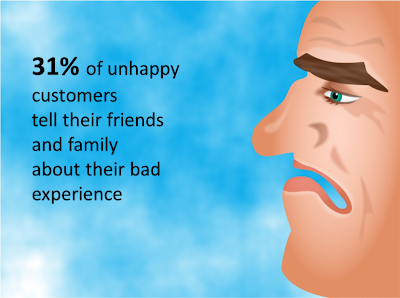
The telephone game can kill your business.
This fun childhood game is where one child whispers a message to another, who then whispers to a third and so on around the circle until the last player tells the final version to the entire group. The process illustrates how quickly a simple and short message can completely change as it is shared even within a small group.
According to a study at Northwestern published in the Journal of Neuroscience, your brain remembers events slightly differently every time you recall a previous memory. Imagine how the remembered versions would vary with a large group of people. Then think about what can happen through social media. If you are concerned about brands and messaging, it is imperative that you take these factors into account so you can leverage positive customer experiences and minimize negative stories.
While it may be tempting to dodge unhappy customers, neglecting them will only exacerbate the situation. A recent Retail Customer Dissatisfaction Study showed that up to 31% of dissatisfied customers tell others about their experience with 6% of those telling as many as six or more people. Not the word of mouth that you want to build your brand or your business.
With less than 10% of customers voicing their concerns when their expectations are not met, you should take full advantage of the actionable feedback that you receive by:
- Reaching out to unhappy customers to truly understand their frustrations
- Empathizing with their situation
- Trying to make it right from their perspective
Read more about turning unhappy customers into promoters...
About LSA Global
Founded in 1995, LSA Global is a leading performance consulting and training firm that helps high growth technology, services, and life-science companies create a competitive advantage by powerfully aligning their culture and talent with their strategy. Learn more about getting aligned
Does speed kill customer service?
Too many customer service and contact centers still weigh the number and speed of calls to measure day-to-day rep performance. That is a mistake. No customer wants to feel like a number in the lineup of callers.
While it is true that customers want their issues resolved quickly, they also want to be served in a way that feels fair, reasonable and respectful. When you analyze customer satisfaction data, it pays to slow down the service experience to ensure that all clients feel as though:
- They have your full attention
- You understand their unique situation
- You genuinely want to resolve their issue
Financially, the better the service experience, the more likely you are to retain that client and have them tell a friend to take advantage of what you have to offer.
L.L. Bean learned to slow down the customer experience long ago. Every customer service call is answered by a live person. Their reps have been trained to allocate the time required to build rapport, understand the problem and solve the issue. They are not rewarded for rushing through calls. They are measured by the problems they solve and the quality of the interaction from the buyer's perspective.
The objective of customer service should be to generate good will (as measured by repeat and referred business) and leave the customer feeling that they were well treated.
The bottom line: If you want to improve customer acquisition, loyalty, growth, and satisfaction, try slowing down your customer service interactions.
Read more about customer service excellence...
About LSA Global
Founded in 1995, LSA Global is a leading performance consulting and training firm that helps high growth technology, services, and life-science companies create a competitive advantage by powerfully aligning their culture and talent with their strategy. Learn more about getting aligned

Virtual project teams contain additional (and often hidden) risks.
Creating a high performing team is challenging enough when all team members are on the same site. When the team operates virtually (and often only for the duration of a project), the challenges are multiplied. Getting virtual project team members to work in harmony is no easy task.
Despite detailed project plans and frequent status meetings, some virtual teams just do not work well together. Most of us have experienced the fallout - bickering, unproductive meetings and disengagement as the project falls behind and begins to miss the mark.
It is no secret that the science of project management alone cannot create successful projects without committed, motivated and collaborative team members. A weak, uncooperative team isn't just unproductive; it can result in resentment, disruptive politics and active disengagement.
A positive environment promotes trust and respect among team members and increases performance through productive habits. Often the key is a project leader who ties the team together and embodies the necessary project leadership skills and attributes that help the team succeed.
Read more about the 5 tips for virtual teams that will keep you on track...
About LSA Global
Founded in 1995, LSA Global is a leading performance consulting and training firm that helps high growth technology, services, and life-science companies create a competitive advantage by powerfully aligning their culture and talent with their strategy. Learn more about getting aligned

Important projects fail to meet internal and external stakeholder expectations at an alarming rate - up to 75% by some accounts.
There are many well-known culprits. Project failure typically starts with poor project definition and a kick-off process that overlooks the importance of setting the right business case, stakeholder clarity or team environment for success. The lack of planning upfront runs into inadequate stakeholder expectation management and then dovetails into planning and forecasting problems due to insufficient consideration of the complexity and nuances of the task at hand.
In a domino effect, this weak foundation sets the stage for negative project team dynamics as you try to balance the typical project pressures of trade-offs between cost, schedule, scope and quality when you lack the necessary information or support.
Team discontent then typically arises in the areas of problem solving, decision making, conflict resolution, continuous improvement, reward systems, meetings, accountability, trust, communication, change management, and performance measurement.
Successful project managers know that conducting reviews before, during and after a project pays big dividends. For example, one recent high-tech client was able to identify a missing stakeholder and add two critical resources after a project "pre-mortem" identified previously undetected customer risks. Another life-sciences client used "live-mortems" at key project gates to improve team engagement by 26% and progress on two previously dependent areas to deliver ahead of schedule. Finally in a classic post-mortem, a recent professional services client identified 7 key improvement areas for future projects critical to retaining their top technical talent despite stiff competition for those employees.
The bottom line with complex and integrated projects - "go slow to go fast" when it comes to setting the foundation and "go fast to go faster" when it comes to learning, prototyping and innovating.
Read more about using proven project post-mortems before, during and after projects...
About LSA Global
Founded in 1995, LSA Global is a leading performance consulting and training firm that helps high growth technology, services, and life-science companies create a competitive advantage by powerfully aligning their culture and talent with their strategy. Learn more about getting aligned

How we think about change management must fundamentally change.
Over the past twenty-five years we have designed, implemented and facilitated hundreds of change efforts from the inside as thought leaders, consultants and trainers. The most important learning from our collective experience is this: How we think about change management must fundamentally change.
New Context
Organizational change should be viewed within the emergent 21st century context: the global economy, technological and mobile innovations, resource constraints, uncertainty, and the boundary-challenging business environment within which we operate.
In addition to these "physical" factors we must consider the current psychological factors: multi-generational workforce, change savvy (and change weary) employees, and the interconnectedness and multiculturalism that characterize our organizations. Our business environments, more than ever before, are dynamic, complex and constantly facing change.
If change is so ubiquitous, why does it need to be managed?
Today, leaders must create organizations that quickly evaluate, decide and embrace the daily, weekly and quarterly changes present in our environments. That said, what about bigger, planned, transformative change?
The 21st century question regarding organization-wide change is not: How do we change? Rather the question is: Why are we changing? If this question is fully vetted, the answer should ultimately point to two critical areas and a new approach to change.
Read more about the new approach to successful and lasting change...
About LSA Global
Founded in 1995, LSA Global is a leading performance consulting and training firm that helps high growth technology, services, and life-science companies create a competitive advantage by powerfully aligning their culture and talent with their strategy. Learn more about getting aligned
Increased breadth, complexity, and the speed of change provide a unique challenge to leaders who are continually being asked to do more with less.
Not surprisingly, most change initiatives fail to meet original expectations - up to 70% by some accounts.
Even though change is typically used to improve the current situation, maintaining the status quo is far easier than making an organizational change. Change is work. To succeed, leaders must balance a laser-like focus and an unwavering commitment with great flexibility and intelligent adaptation as they navigate change.
Effective leaders understand and practice how to field resistance to change, analyze the current state of change acceptance in their teams (awareness, understanding, acceptance, commitment) and thoughtfully plan responses to better help move teams through change.
Our clients typically use change management to:
- Help an under performing leader or team
- Improve cooperation and results across business units and functions.
- Align their unique organizational culture with specific strategic goals.
- Integrate multiple change initiatives.
- Increase stakeholder and employee commitment, engagement and motivation.
- Improve leadership and change agent readiness and workforce resilience.
Read more about proven and practical approaches to organizational change...
About LSA Global
Founded in 1995, LSA Global is a leading performance consulting and training firm that helps high growth technology, services, and life-science companies create a competitive advantage by powerfully aligning their culture and talent with their strategy. Learn more about getting aligned

Is it possible that what you learned about coaching is wrong?
For much of the sales world, the notion that sales coaching is an essential ingredient in improving sales organizations is not up for debate. But while the debate about the necessity of sales coaching may be over, most sales leaders - if they're honest - will tell you that they barely have time to manage their sales teams - and they just don't have time to coach.
With that reality as the backdrop, we want to pose this question - What if you could cut your coaching time in half and get better results?
In our decades years of working with leading sales executives and front line managers, we have identified what we consider to be the top two mistakes that hinder effective sales coaching - mistakes that if avoided, will greatly simplify the sales coaching process and minimize the time it takes to effectively develop your reps.
Read more about the top 2 sales coaching mistakes and what to do about it...
About LSA Global
Founded in 1995, LSA Global is a leading performance consulting and training firm that helps high growth technology, services, and life-science companies create a competitive advantage by powerfully aligning their culture and talent with their strategy. Learn more about getting aligned
There is substantial evidence that sales professionals who receive consistent sales coaching from managers and mentors achieve significantly higher levels of performance than those who receive little or no sales coaching.
Effective sales coaches provide perspective and feedback that result in higher sales performance. Our research shows that it makes a 4-to-1 difference in terms of revenue production.
Our clients typically use sales performance coaching when:
- "B" and "C" players are holding back sales goals.
- Sales leaders need help to more effectively motivate and equip their team.
- A lack of sales accountability is dragging down the sales culture and results.
- Only "lagging indicators" of performance rule the day.
Read more about providing sales managers and leaders with the core sales coaching methodologies, skills and tools necessary to succeed...
About LSA Global
Founded in 1995, LSA Global is a leading performance consulting and training firm that helps high growth technology, services, and life-science companies create a competitive advantage by powerfully aligning their culture and talent with their strategy. Learn more about getting aligned

A recent study by Accenture found that 31% of employees do not like their boss. Manpower Group research shows that 44% of workers are unsatisfied. The list goes on and on.
It is now common knowledge at most companies that if employees feel as though they are not learning anything new or that their career is at a standstill, they are likely to get that proverbial itch to leave and look for greener pastures.
Some employees feel that, because of the lackluster economy and perceived high unemployment rate, their company doesn't much care about their career. Others do not see a clear path for advancement. Still others, even if they are dissatisfied, feel that there are no good job opportunities anyway so why bother looking? Whatever the feelings, as employee engagement and retention experts for decades, we are here to tell you that most employers DO CARE....in fact, they care very much.
Since the mid-1990s, the focus on retaining competent and talented employees has been increasingly on the radar screen for most executives. In addition, they are increasingly aware of the high cost of turnover. Executives know that if you leave, they will pay more than your current cost to replace you. Even more important, they will lose valuable time in meeting company and customer goals.
While unemployment overall is still historically high, for those with bachelor's and advanced degrees, U.S. unemployment is still significantly below 5% (Bureau of Labor Statistics). Employers know that replacing a skilled worker, especially in fields such as technology and health care, is not as easy as it seems when reading the daily headlines. So if you or your direct reports are dissatisfied and wishing for a change, consider the following.
Read more about the 3 steps to better navigating your own career...
About LSA Global
Founded in 1995, LSA Global is a leading performance consulting and training firm that helps high growth technology, services, and life-science companies create a competitive advantage by powerfully aligning their culture and talent with their strategy. Learn more about getting aligned

Effectively developing talent (especially millennials) in a way that fits your culture and business strategy can be a challenge.
Done right, the benefits of effectively developing the careers of the top current and future talent within your organization can be massive:
- Decreased attrition
- Lower recruiting and employee relations costs
- Higher levels of productivity and discretionary effort
- Improved employment branding
The advantages to employees are just as powerful including higher levels of engagement, commitment, motivation, pride, and development. Successful companies take a three-pronged approach to career development that is aligned with their culture and business and talent strategies.
Developing Top Talent provides managers with a practical blueprint of their roles and responsibilities in developing the careers of their direct reports. It uses a proven four-step career development model and provides a career development toolkit to support employee assessments and career path planning.
Navigating Your Career gives individual contributors a proven process and critical tools for "owning" their own career development and having effective career conversations with managers and peers.
Career Development Coaching Certification prepares people to become an internal career development coach by providing the process and tools for working one-on-one with employees to help them clarify their natural talents and strengths and to facilitate their discovery of which roles might be the best fit for maximum personal and company productivity.
About LSA Global
Founded in 1995, LSA Global is a leading performance consulting and training firm that helps high growth technology, services, and life-science companies create a competitive advantage by powerfully aligning their culture and talent with their strategy. Learn more about getting aligned
Once your business direction is clear and compelling, it is your job as a leader to understand, shape, and align your corporate culture to drive key strategic initiatives.
As senior executives will attest, this is no easy task. While most agree that a sound strategic plan is imperative, few agree on what to do next. In fact, research shows that less than ten percent of even the well crafted strategies are effectively executed.
For most fast growing and evolving companies, we know that the biggest obstacles to success have little to do with designing a winning strategy. When you look under the hood of many organizations (even ones that have a solid strategic plan), you find that they are not firing on all cylinders.
They are not performing at their peak. And their leaders have not created the high performance environment necessary to get sustainable results now or in the future.
A recent Harvard Business School research report described how an effective culture can account for up to half of the differential in performance between organizations in the same business. This should be a powerful motivator for all leaders.
Read more about how to create a high performance culture for your strategy
About LSA Global
Founded in 1995, LSA Global is a leading performance consulting and training firm that helps high growth technology, services, and life-science companies create a competitive advantage by powerfully aligning their culture and talent with their strategy. Learn more about getting aligned
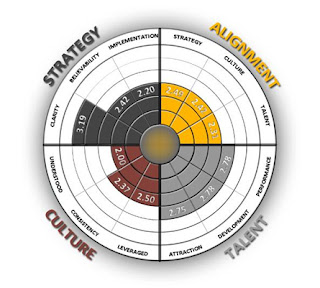
You have a solid strategy. A promising future. Now, how do you get where you want to go?
If you believe that you are headed in the right direction, but your current performance is not where you want it to be, think alignment.
Organizational alignment means configuring the key elements of your company to optimize performance. Based upon over twenty years of research, we believe that when your strategy, culture and talent are misaligned, your organization is at best under-performing and at worst set up for major problems.
Do not get fooled into making isolated strategy, culture or talent moves that do not lead your company dramatically forward. Neither talent, nor culture, nor strategy alone will produce the results you want. Alignment is the missing ingredient.
Learn more about:
Educating Senior Leaders
about the importance of organizational alignment and change
Assessing Current Alignment
of cultural and talent with strategy
Implementing Your Key Moves
defined for immediate impact on performance and organizational health
About LSA Global
Founded in 1995, LSA Global is a leading performance consulting and training firm that helps high growth technology, services, and life-science companies create a competitive advantage by powerfully aligning their culture and talent with their strategy. Learn more about getting aligned

Just 5%.
A 5% increase in customer loyalty can boost profits by as much as 25% to 85%.
It is up to the Contact Center Leadership Team to stimulate improved performance and execution so these gains become a reality. The leaders need to create the circumstances that elicit better performance from their people.
The good news is that positive customer experiences drive repeat business, cross-selling and up-selling of services, loyal customers, and referrals. Positive experiences decrease the overall costs of service and sales.
The bad news is that contact center technology has not been the great equalizer between people and their performance that had been hoped. While technology has helped to mitigate poor performance and standardize overall performance, it hasn't fully resolved high attrition rates, lack of engagement, and embarrassing service and sales failures.
These problems and a variety of other ills continue to plague contact centers and result in lost revenue, high service costs, and low customer loyalty. So the key question for Contact Center Leaders and their bosses is not "why" high performance but rather "how?"
Fortunately, with the help of 16 years of research and the biggest bank of high performance environment data in the world, the "how" has become a whole lot easier.
Read more about the 9 components to creating a high performance environment
About LSA Global
Founded in 1995, LSA Global is a leading performance consulting and training firm that helps high growth technology, services, and life-science companies create a competitive advantage by powerfully aligning their culture and talent with their strategy. Learn more about getting aligned
Are you walking the talk with your customers? And does it really matter?
If a company does not follow through on its brand promise, or if the brand promise is at conflict with the company's positioning, its reputation and sales will likely falter. The experience your employees create with each and every customer is greatly influenced long before the customer interaction even begins.
It's determined by how effective your customer service strategy, and your brand promise, is designed and executed.
For a customer service organization to thrive, the leader must align its culture and talent not only with the customer service strategy, but also with the overall company business strategy.
- A clear strategy provides the necessary direction and clarity.
- A high performance culture provides the environment for your employees to thrive.
- The right talent in the right place makes it happen over time.
Understanding the overall business strategy is the first step. Defining your customer service strategy and aligning it to the overall business strategy is the next step. Combined, they should establish a clear and meaningful brand promise that helps to create and retain loyal customers.
Read more about the key steps required to establish your brand promise...
About LSA Global
Founded in 1995, LSA Global is a leading performance consulting and training firm that helps high growth technology, services, and life-science companies create a competitive advantage by powerfully aligning their culture and talent with their strategy. Learn more about getting aligned


